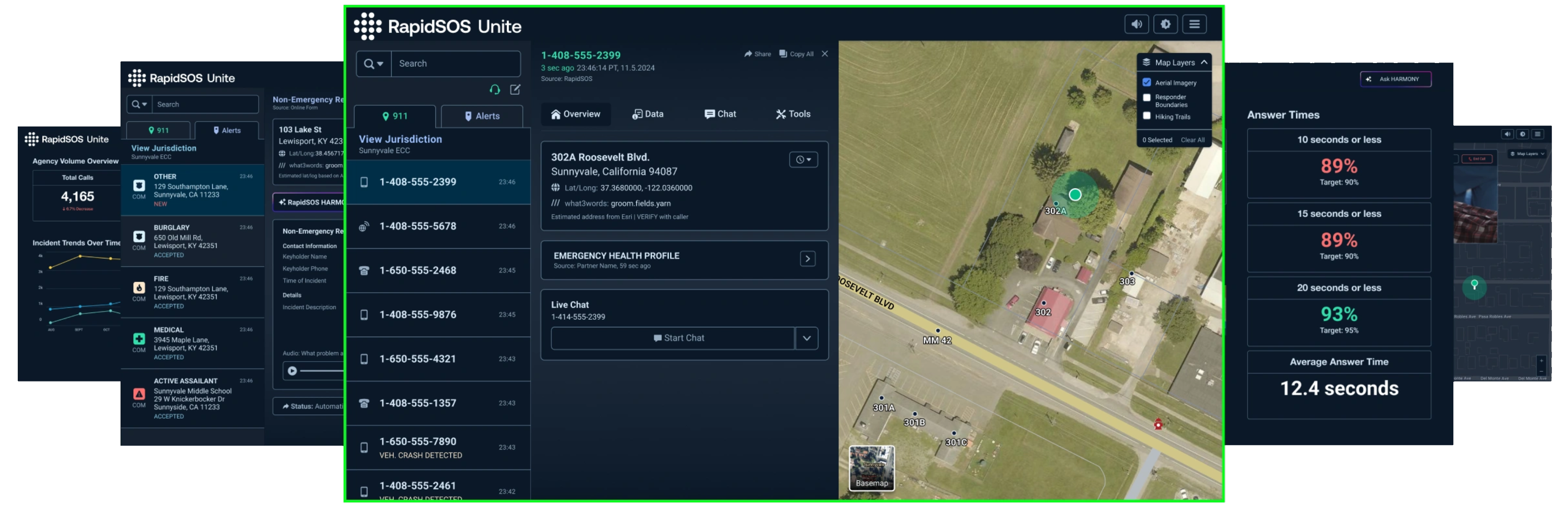
The platform has multiple features that are beneficial to a 911 call-taker or dispatcher. These features include precise location via the phone's GPS signal, "breadcrumbs" that show where the phone is on the map as it moves, dropping small location icons behind it, call transcription, passive listening for trigger words like knife or gun that sends a notification, a running log of all recent calls into the system, access to some enhanced information, and many other features that improve the quality of the work.
The location feature works off the phone's own GPS chip rather than relying on which cell tower picked up the call. That's usually a significant jump in accuracy over the tower-based estimate that older 911 systems fall back on, especially indoors or in dense areas where tower triangulation gets fuzzy.
Breadcrumbing keeps that location moving with the caller instead of freezing it at the moment the call connected. As the phone changes position, the system drops a small marker on the map at intervals, so a dispatcher can watch the path someone has taken: useful for a caller on the move, a fleeing suspect, or someone who can't say exactly where they are.
Call transcription turns the audio into text in real time. That gives a call-taker something to glance at or scroll back through without re-listening to the recording, and it gives the rest of the room a written record of the call as it's happening.
The passive listening feature runs in the background of the call, watching for specific words like knife or gun, and flags the call with a notification when it hears one. It's meant to catch a threat a caller says quietly or in passing, something that might not otherwise get called out to a supervisor or nearby units right away.
The running log of recent calls gives a dispatcher a quick way to see what's already come in from a location or an area without digging back through CAD entries one at a time.
The enhanced information can include a caller's medical profile if they've set one up ahead of time (allergies, conditions, emergency contacts), or automated data from a connected device, a smart-home alarm trigger or a connected car's crash sensors, arriving with context attached instead of just a bare address.